Spotlight on: Melon

The exact place of origin of the common melon (Cucumis melo) is unidentified to date but it is widely accepted that it somewhere in the area between the Mediterranean and northern India. The variety eaten in Antiquity was the cucumber-shaped chate melon (Cucumis melo var. Chate), rather than the sweet fruit of today.

The watermelon (Citrullus lanatus) is an unrelated species that is native of (west) Africa, as is its sister species, the colocynth (Citrullus colocynthis) — most commonly known as ḥanẓal (حنظل) in Arabic –, which was never eaten, due to its bitterness. The oldest attested use of the watermelon in the Mediterranean may go back to Egypt in the second millennium BCE. Indeed, the Arabic word for it, biṭṭīkh (بطّيخ), is a descendant of the ancient Egyptian bddw-k’, which became pi-betuke (pi-betikhe) in Coptic, though it has been suggested that this actually denoted the aubergine, and was only later transferred to the watermelon. The depictions of the fruit have also been called into doubt and are said to show the colocynth, rather than the watermelon. The wild ancestor of the watermelon was very different from today’s varieties, particularly in that it was more bitter than sweet.

A more plausible hypothesis of the development of the watermelon is that it travelled eastward and after cultivation in India returned west, courtesy of the Arab merchants, who also introduced the fruit to Europe. Support for this hypothesis may be found in the fact that medieval Arabic scholars often distinguished between a number of watermelon varieties, all of which hail from the east: Falasṭīnī (Palestinian), Shāmī (Syrian), Hindī (Indian) and Sindī (from the Sind, i.e. north-west India).

In Arabic, dullāʿ (دلاع) and biṭṭīkh were not uncommonly used interchangeably for both the common melon and the watermelon; the former word is of Berber origin and explains why this is the still the most common word for watermelon in North African vernaculars. The term shammām (شمّام) is applied only to the sweet (cantaloupe) melon.

In the medieval Arabic culinary tradition, melons are used relatively rarely. There are some savoury recipes for snake melon (‘ajjūr, عجّور) used in savoury recipes in Syrian and Egyptian collections, whereas the latter also contain a chate melon confection. In the early Abbasid tradition, the watermelon appears in some judhāba and fālūdhaj recipes. Additionally, the rind was used in hand-washing powders, whereas the dried ground peel was said to make food cook quickly.

Medicinally, opinions on the benefits of watermelon varied somewhat. According to some, the watermelon was slow to be digested and generates thick blood. Others held that all kinds of melon are beneficial for coughs, kidneys, and ulcers in the lungs and bladder. Al-Qazwini recommended soaking watermelon seeds in honey and milk to ensure its fruit will be very sweet.

The watermelon enjoyed much favour in religion as well, as shown by the following hadith (saying of the Prophet): “Enjoy the watermelon and its fruit, for its juice is a mercy, and its sweetness is like the sweetness of faith. Whoever takes a morsel of watermelon, Allah writes for him seventy thousand good deeds and erases from him seventy thousand misdeeds.”
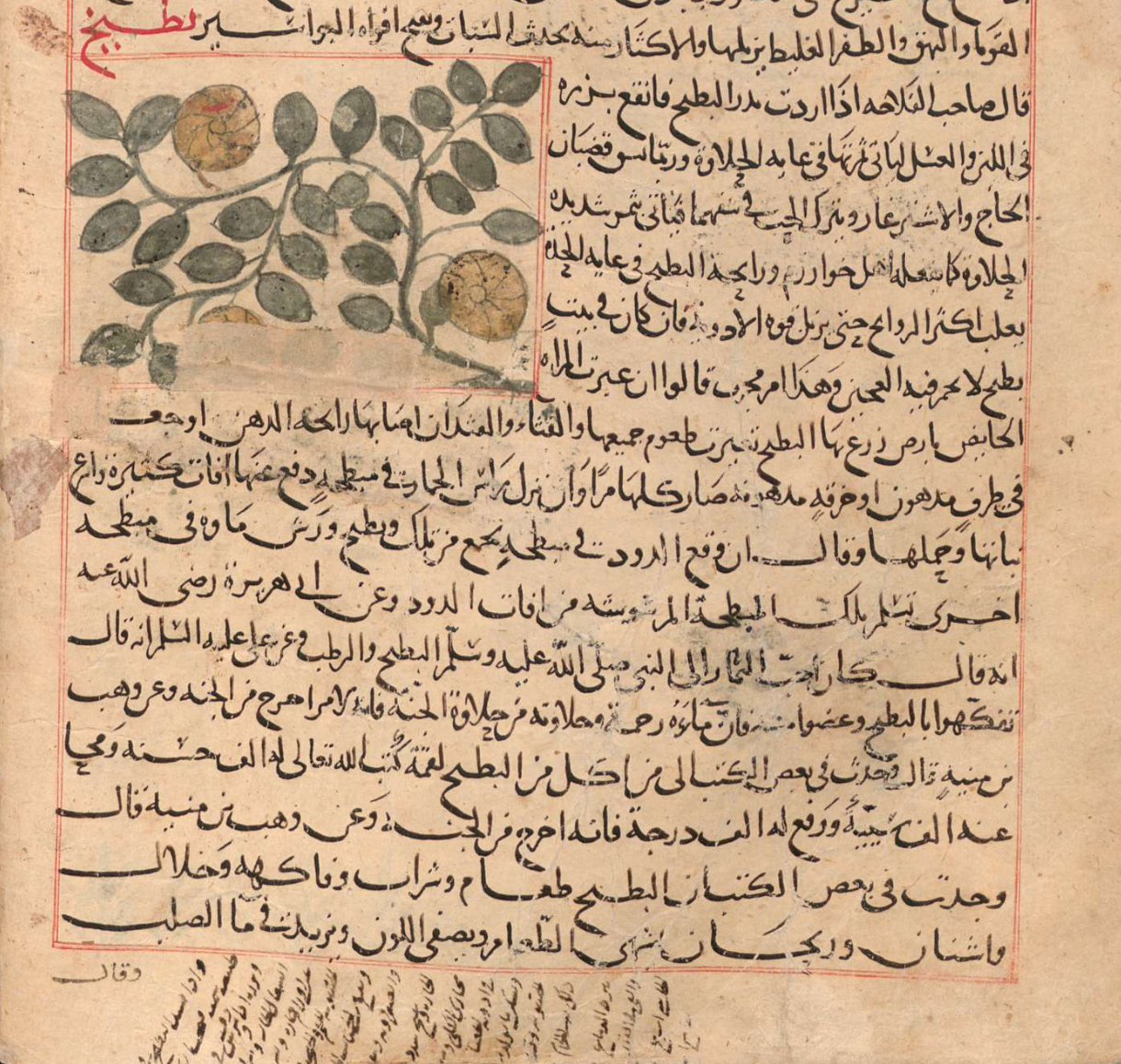
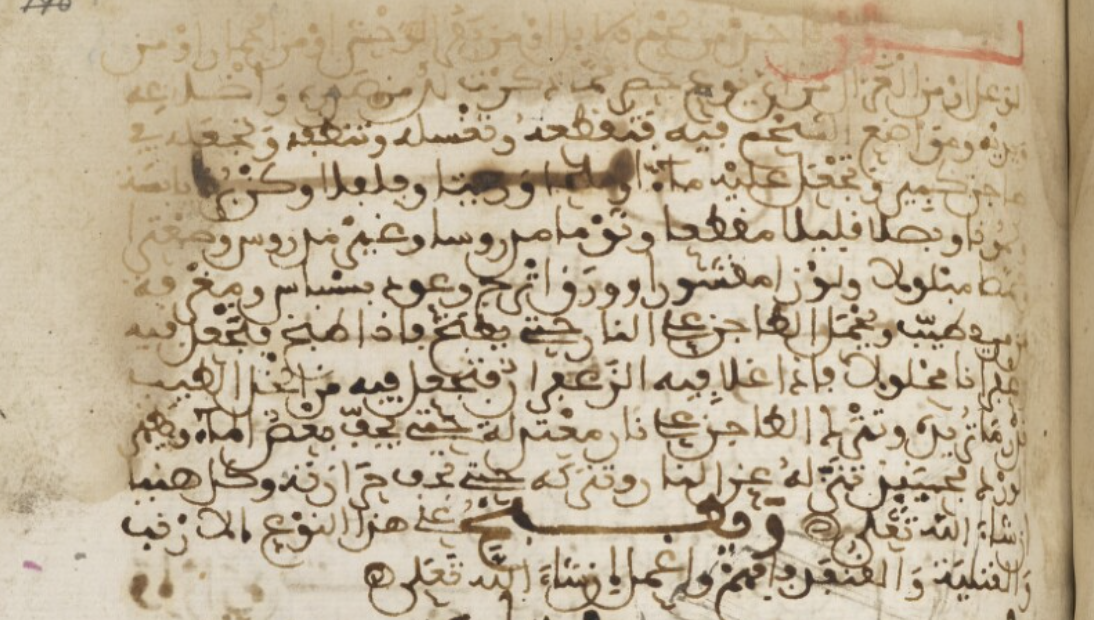
description of melons in al-Qazwini’s ‘Wonders of Creation’
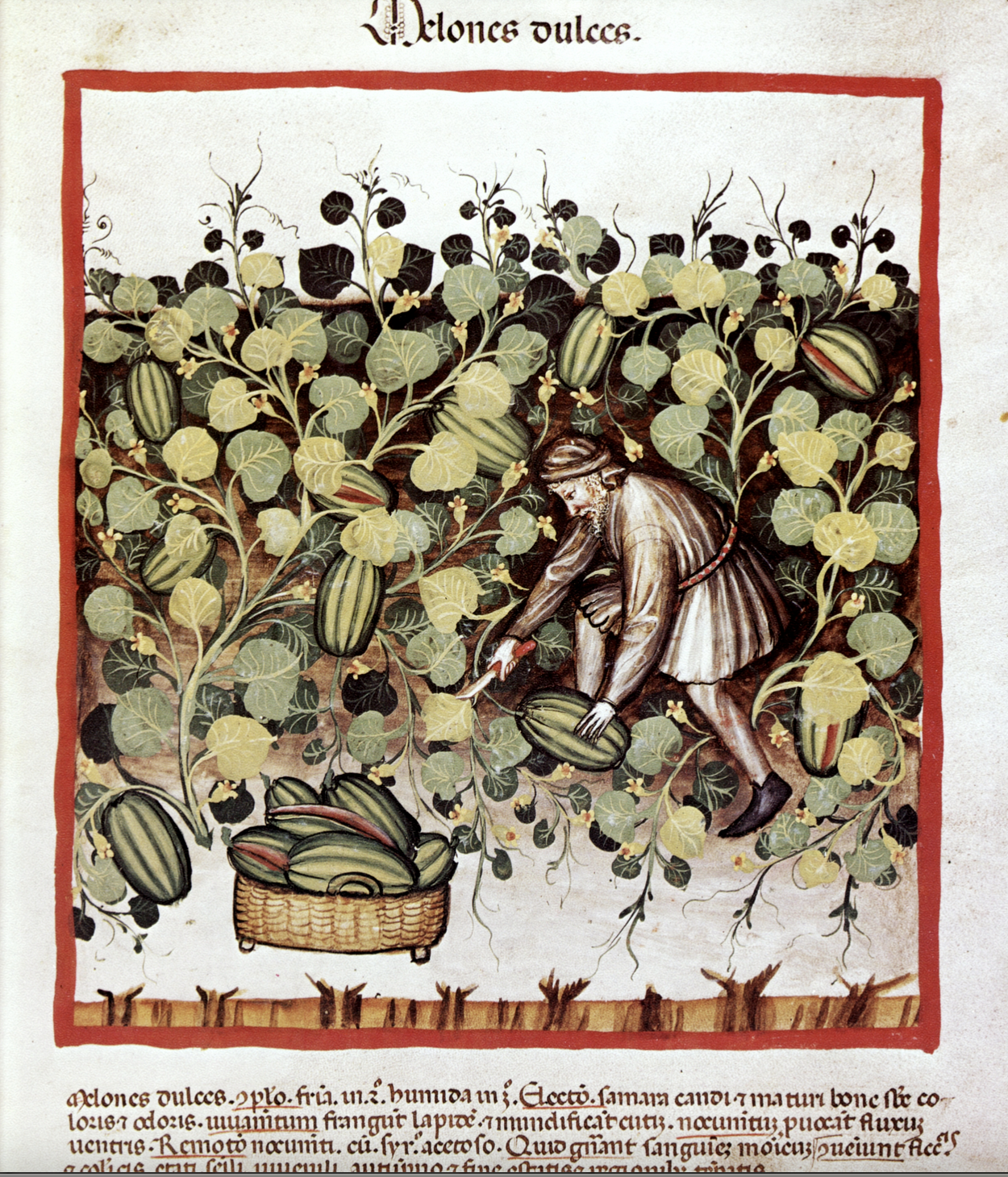
Sweet melons in the Tacuinum Sanitatis (1490, Vienna), the Latin translation of Ibn Butlan’s Taqwim al-Sihha

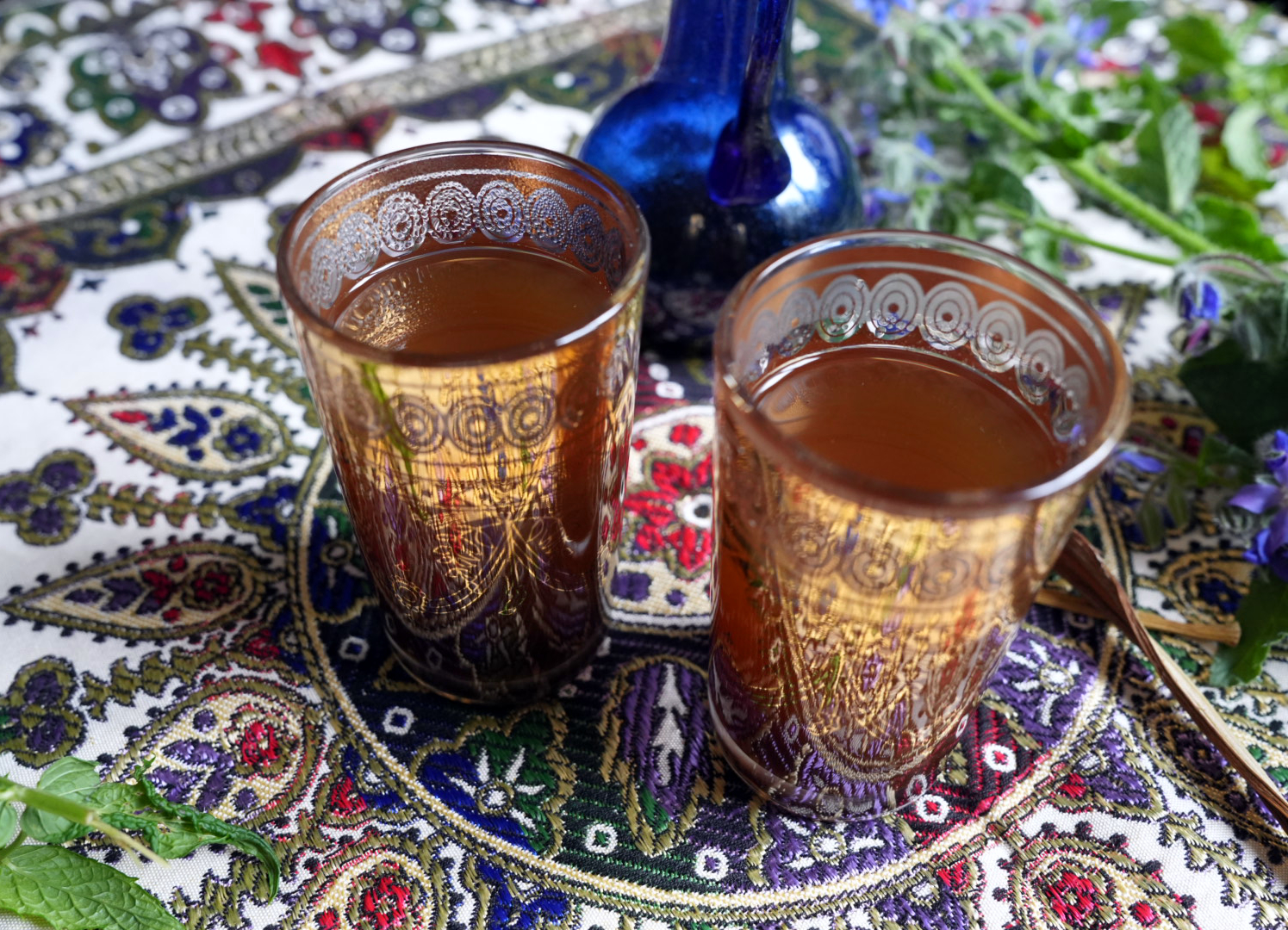
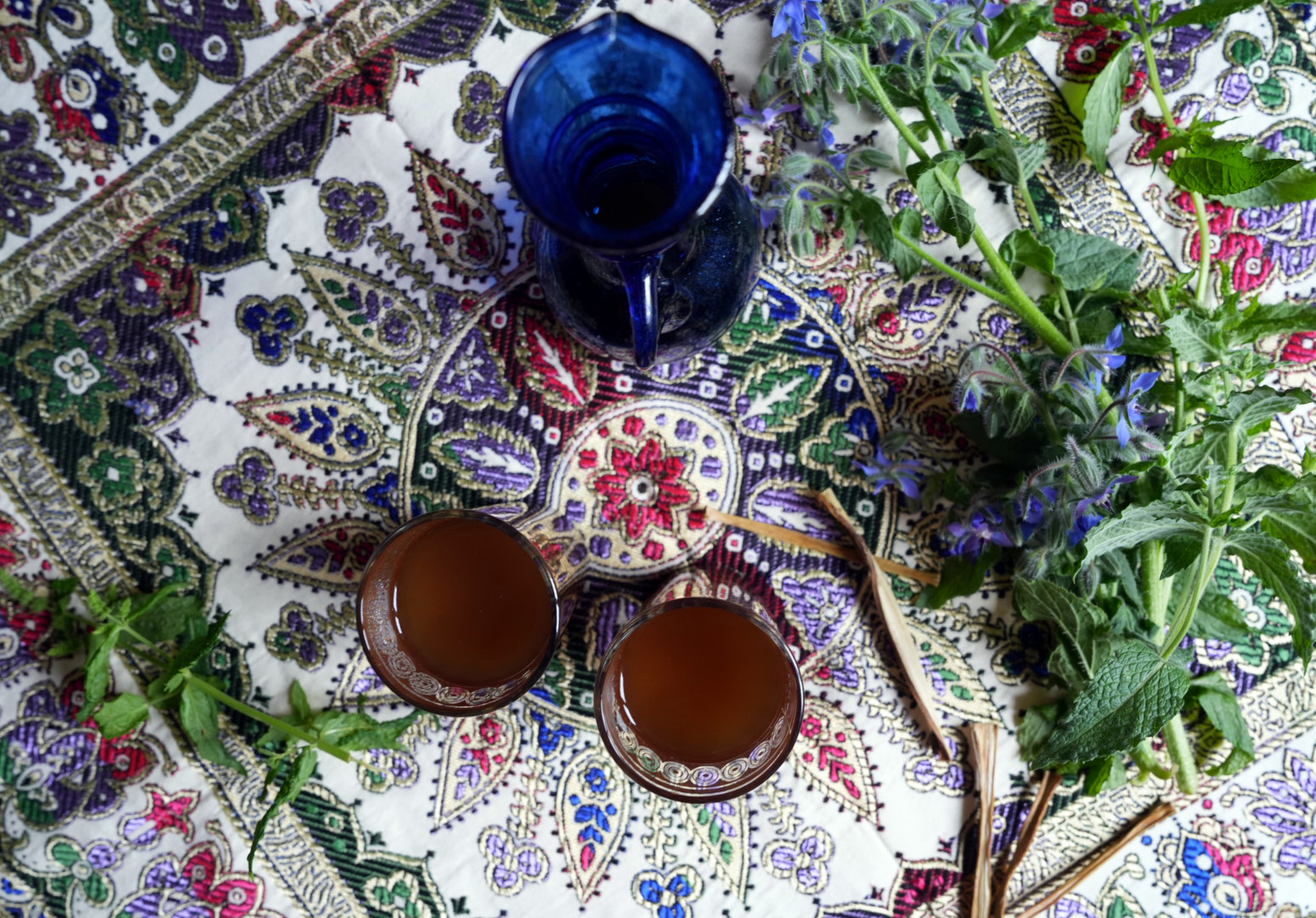
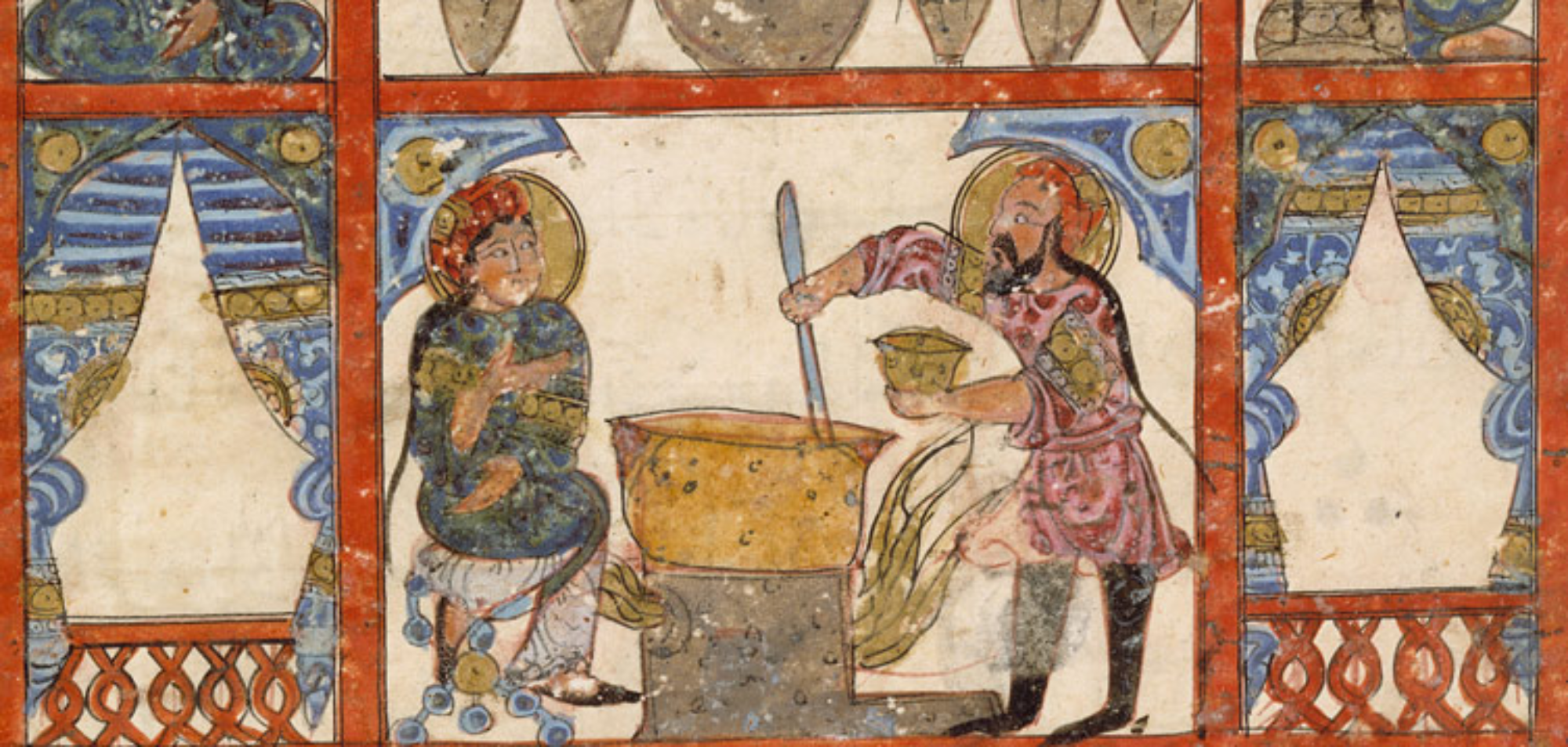
‘The Great Uplifting Syrup’

This is a medicinal syrup (شراب, sharab) included as an appendix to an anonymous 13th-century Andalusian cookery book. The ingredients include borage, mint, and citron leaves, which are infused with a range of pungent aromatics (aloe, Chinese rhubarb, cassia, cinnamon and clove blossoms) tied in a pouch. It is sweetened with sugar.

It is purportedly beneficial for weak stomachs, while strengthening the liver and assisting digestion. More importantly, it also gladdens the heart, hence its name. Honestly, I didn’t notice any differences in my stomach or liver, but I can attest to the fact that drinking this syrup lifted my spirits!

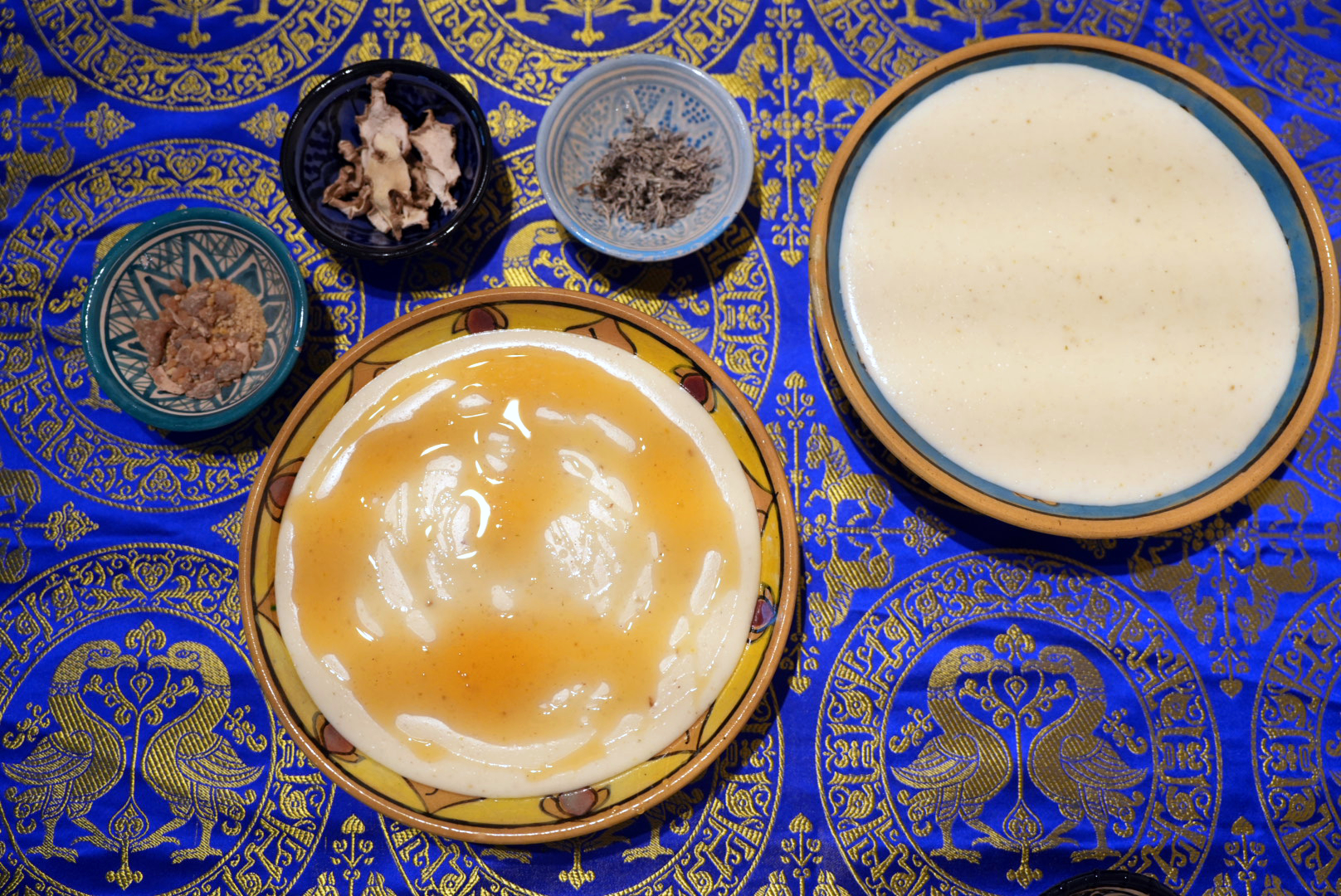
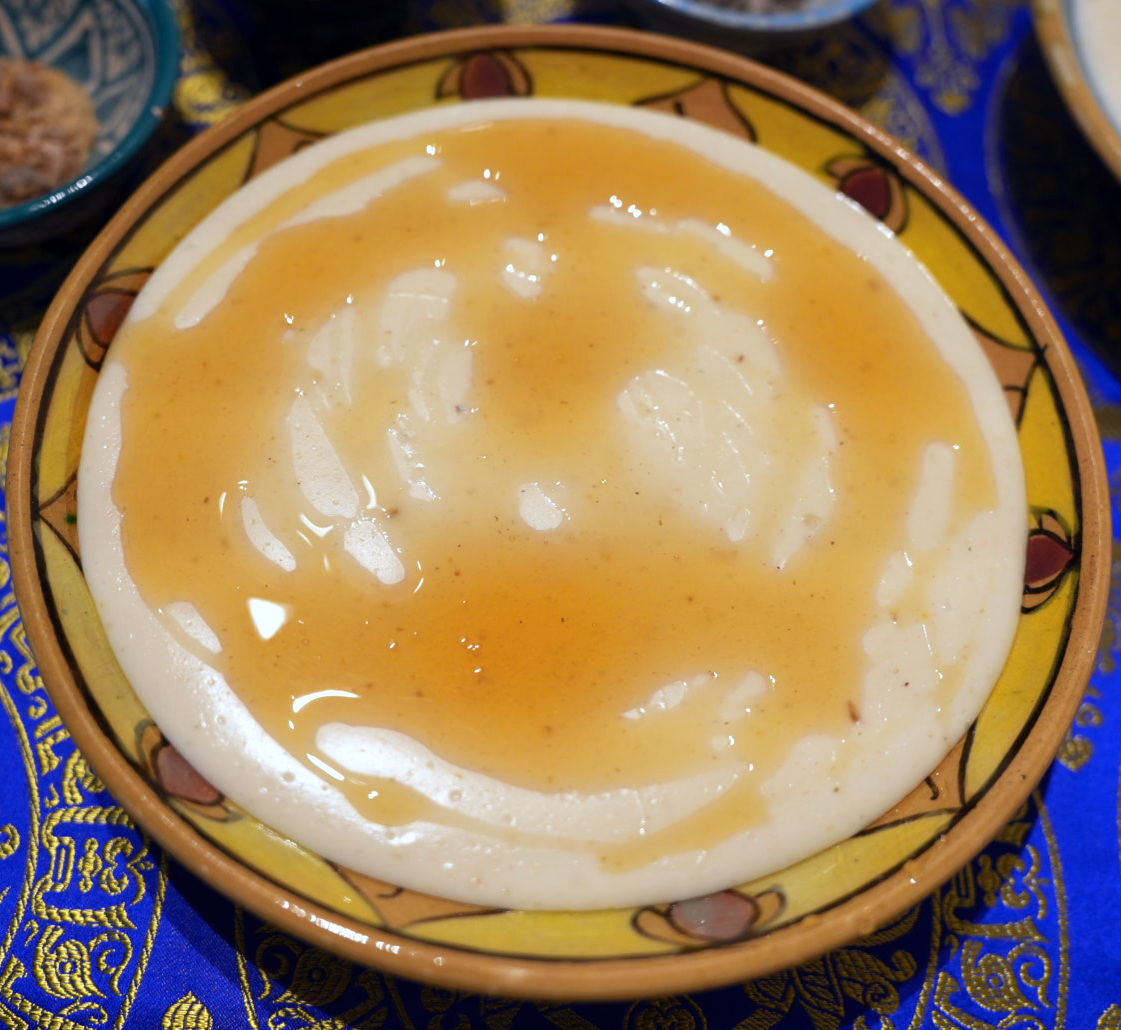
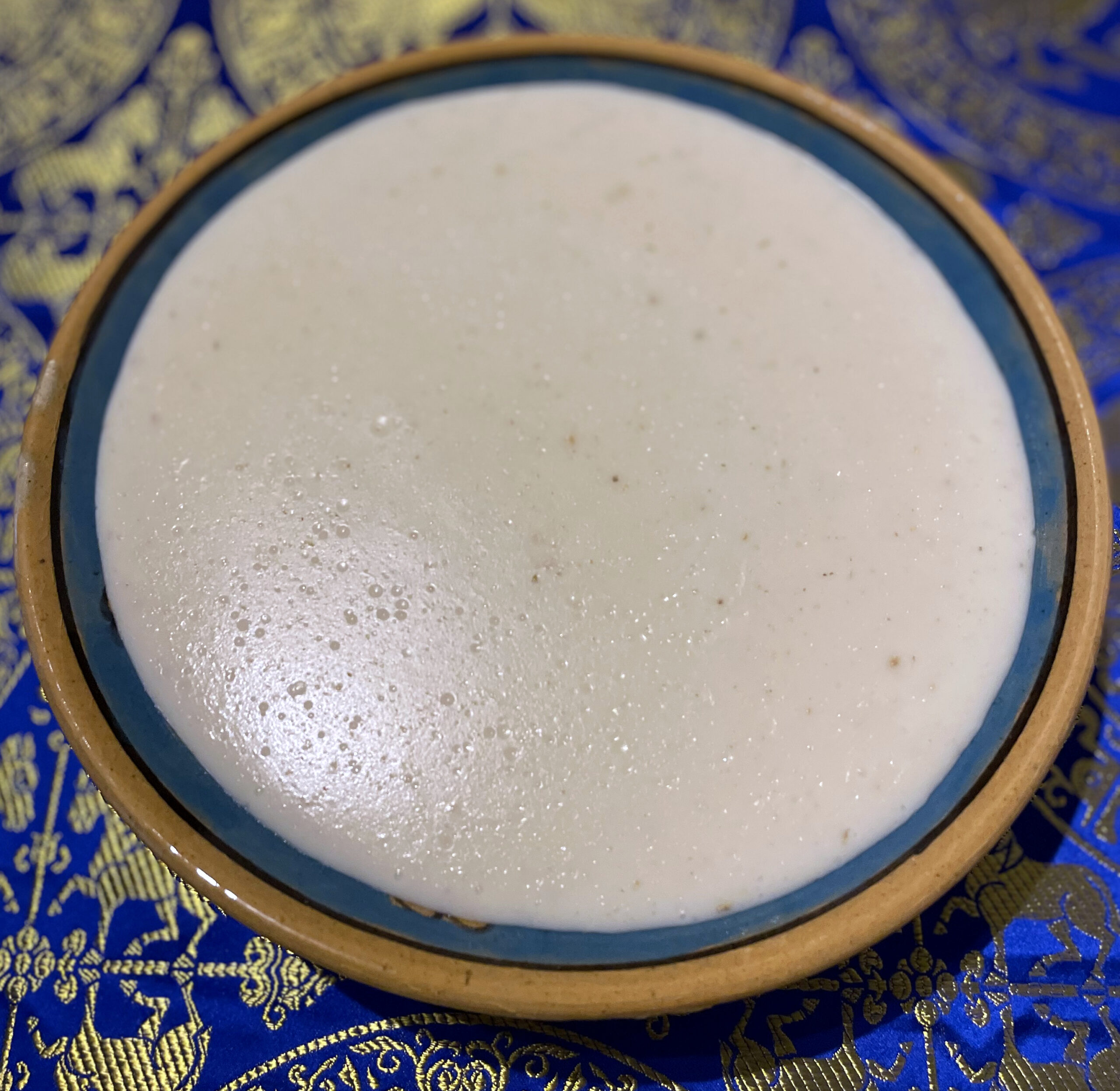
Mamluk starch pudding

This is a recreation of a recipe from The Sultan’s Feast for a wonderful sweet starch pudding, known as hayṭaliyya (هيطلية). Though the recipe is from an Egyptian collection, its name betrays Central Asian origins as it goes back to Hayṭal (هيطل), a name for the historical region of Transoxania, which was usually known as mā wara’ al-nahr (ما وراء النهر), literally ‘beyond the stream’, i.e. the area beyond the Oxus river. Additionally, the word — more particularly the plural hayāṭala — appears in the literature as a name for the Hephthalites or White Huns, tribes from the Mongolian steppe who had settled along the Oxus by the 4th century CE.

The first step is to make the starch (with crushed wheat and water), which is then cooked in milk, added with mastic and two other highly unusual ingredients — tree wormwood (shayba) and shampoo ginger (ʿirq kāfūr). Once the mixture has thickened sufficiently, it’s ready to serve with a generous drizzle of your best honey on top. The result is a very unusual pudding with a bit of a kick.

Spotlight on: Garlic

Garlic (Allium sativum) is one of the oldest cooking ingredients and was already used in Ancient Egypt and Mesopotamia; in fact, the Arabic word thūm (ثوم) goes back to the Akkadian šūmū (from the Sumerian sum). The plant was grown along the northern Mediterranean very early on and the Ancient Greeks were probably the first to preserve garlic by smoking it. According to Dioscorides, it clears bronchi and is a remedy for chronic coughs when eaten raw, baked, or boiled. While the Greeks appreciated the flavour garlic imparted to food, they were less impressed by the odour of garlic on the breath.

It is one of the vegetables mentioned in the Qur’an, alongside cucumber, lentils and onions. It came in two varieties: wild (برّي, barrī) and cultivated (بستاني, bustānī), and became a staple in Arab cooking; according to the author of The Sultan’s Feast, ‘garlic draws forth the aromas of oils in broths, seeds and vegetables, and enhances their flavour.’ Garlic was often cooked with vinegar and oil and garlic to make a sauce. It was also used frequently in fish dishes. There’s even an Egyptian recipe for sour yoghurt and garlic, which results in something most people today would recognize as tzatziki. Garlic was a particular favourite in medieval Andalusian cookery, and often cooked in vinegar.

Medicinally, it was recommended as a diuretic, to remedy flatulence and various dermatological conditions, while chewing its leaves cures eye inflammation. According to the 12th-century physician Ibn Butlan, garlic is partiuclarly good for older people and in winter time. Howver, he warned that it should not be overcooked because then it loses its effectiveness, especially when it is prepared with vinegar and eaten with milk or fish.

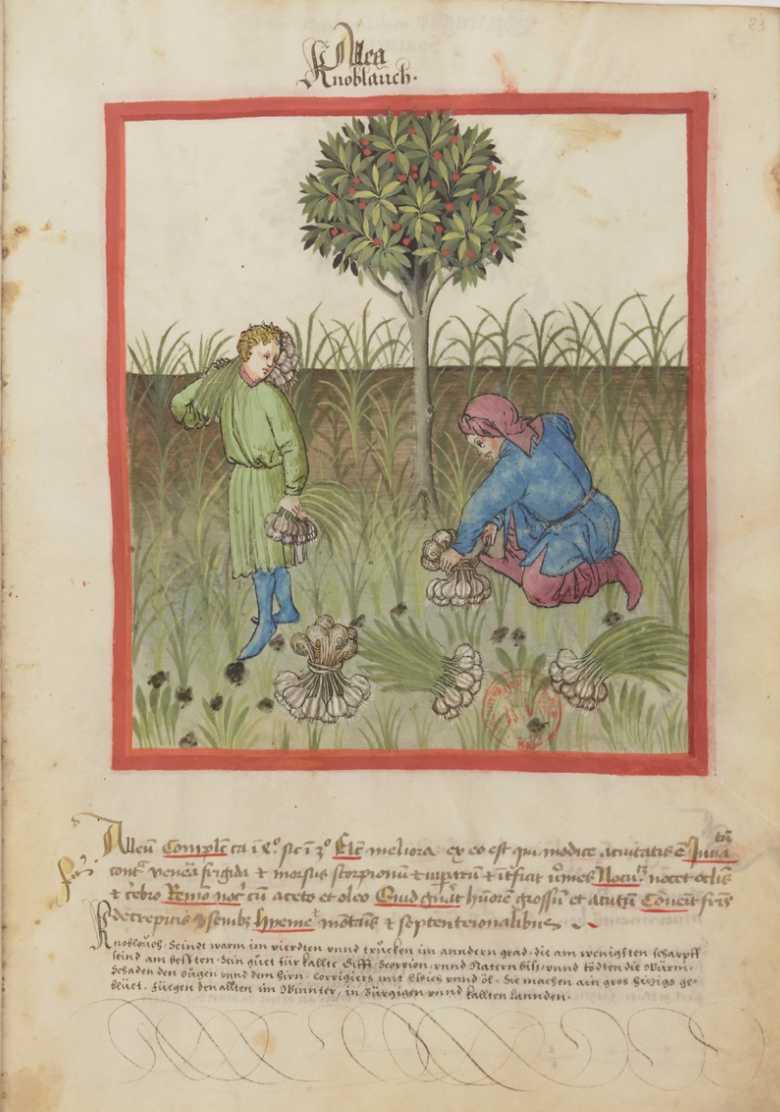
garlic in a 13th-century copy of the Latin translation of Ibn Butlan’s Taqwim al-Sihha

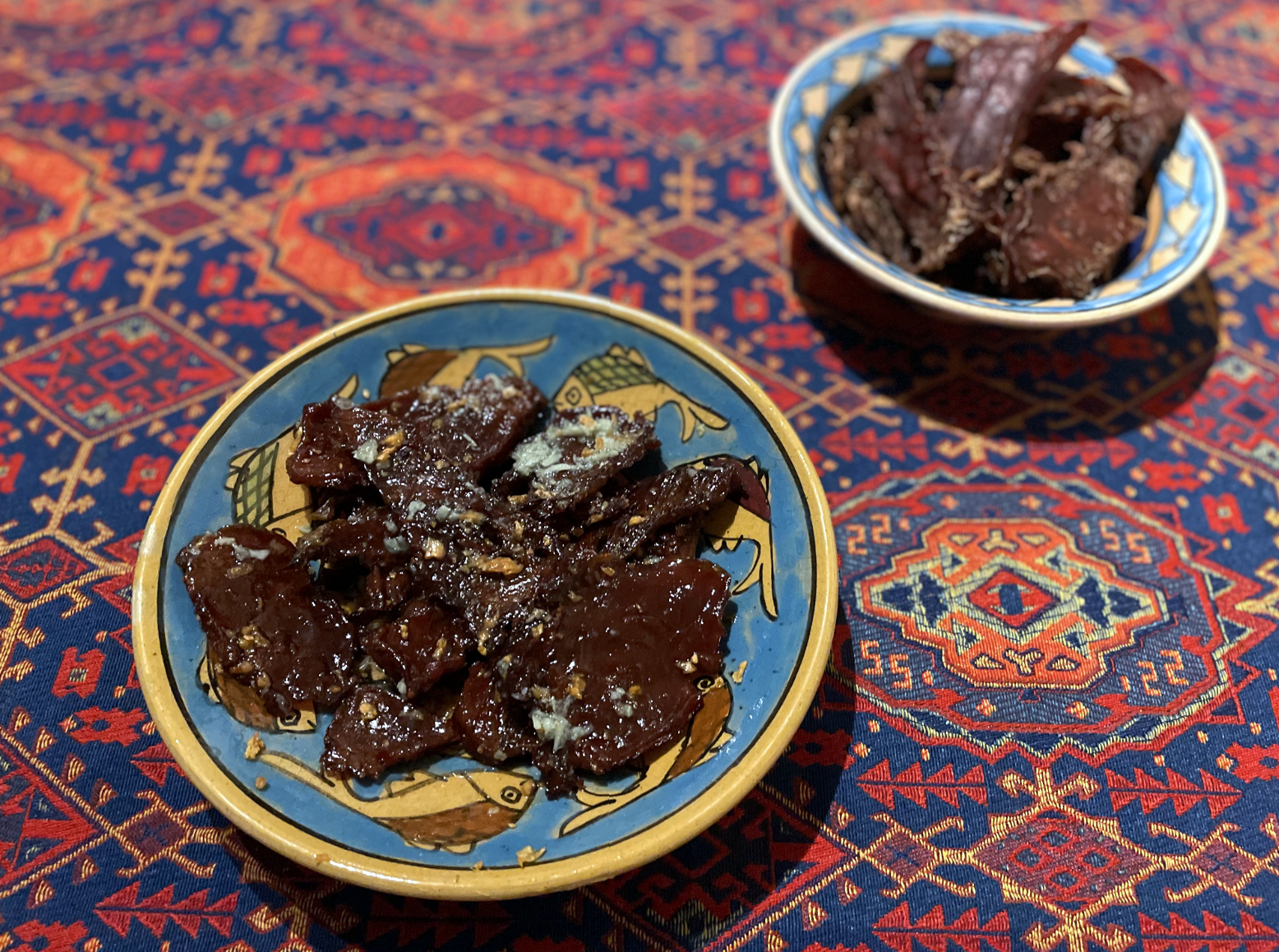
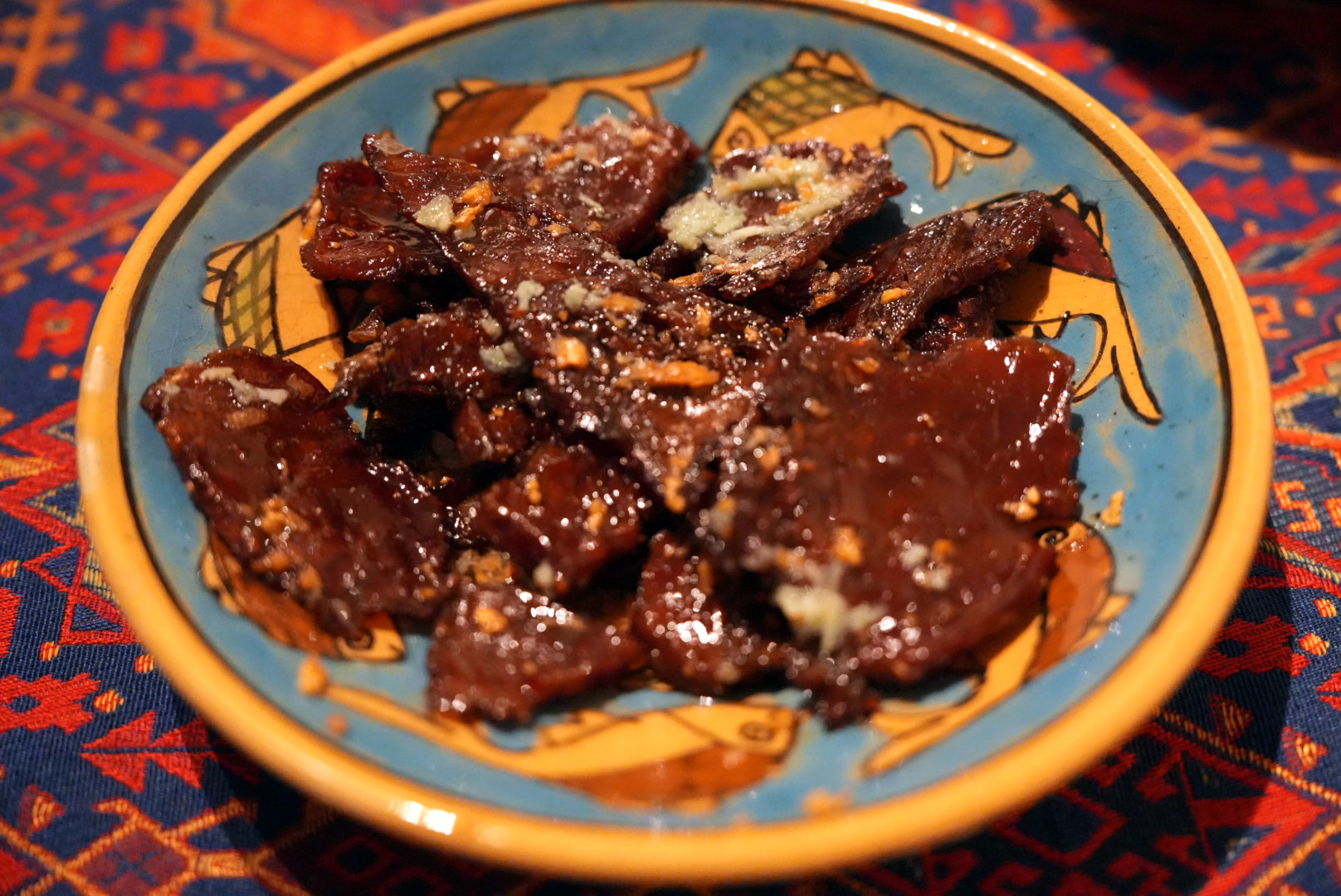
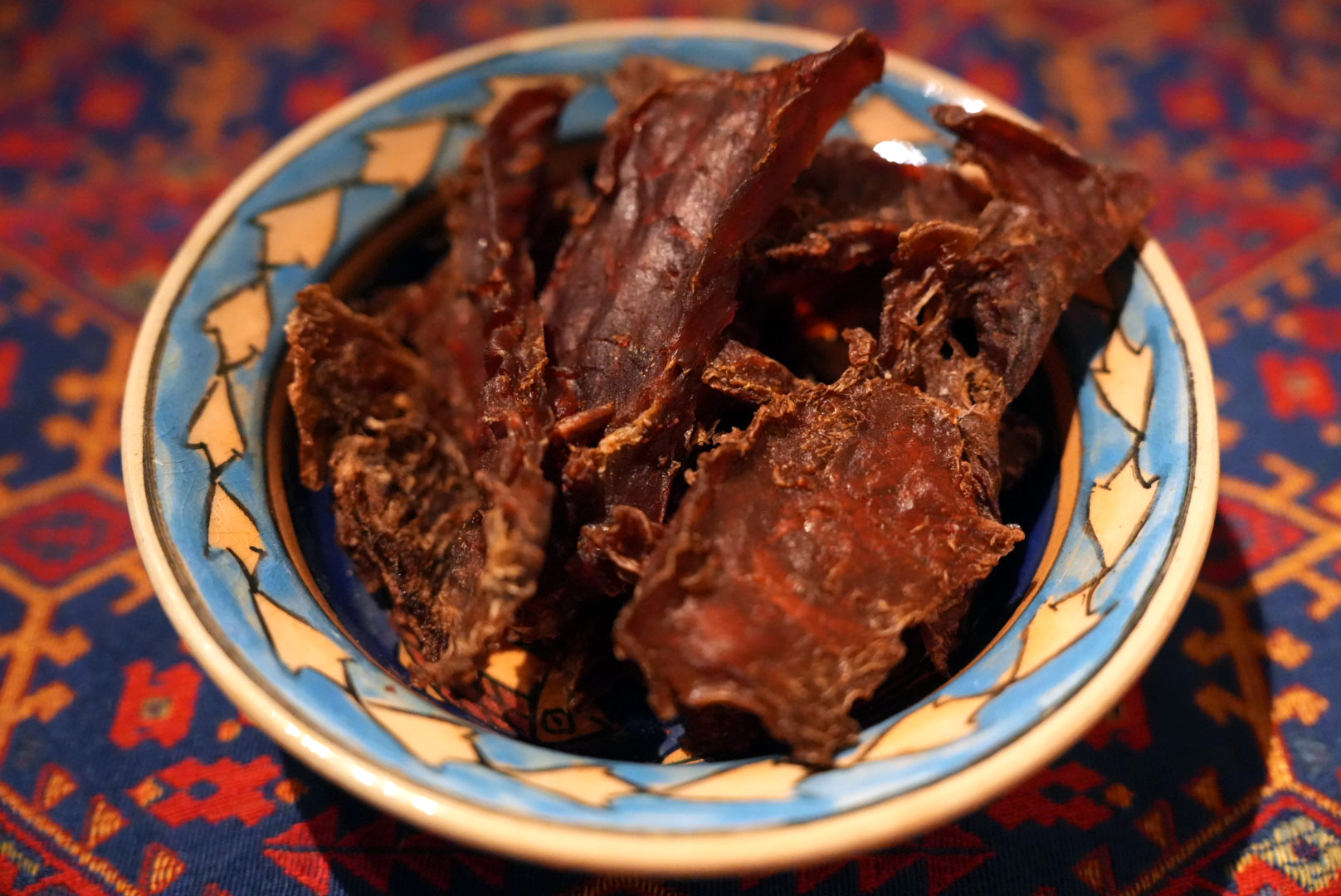
Medieval Andalusian Tuna and Pomelo Vinegar Dish

This extraordinary recipe from The Exile’s Cookbook is one of the few in the Arab culinary tradition that requires tuna — dried tuna, no less. But is doesn’t stop there; what makes it even more special is that it offers an opportuntiy to use the freshly made batch of that gorgeous pomelo vinegar.

The dish is called mushamma’ (مشمّع), which literally means ‘waxed’ (from sham’/شمع, ‘wax’), but in Andalusian Arabic was also used to refer to dried meat or fish. It couldn’t be simpler to make; the tuna is cut into strips and then fried in olive oil. When it is done, garlic is fried in the same oil before the tuna is returned to the pan to soak up the flavours of the garlic. Once that is done, it is time to serve with a sprinkling of the pomelo vinegar (though according to the recipe you can also use lime or sour grape vinegar). According to the recipe, one can also make a sauce with the vinegar and garlic and then drench the tuna with it, which is exactly what I did! A very unusual recipe and a must-try, if you ask me! The combination yields a very umami taste that is unlike anything I’ve ever had.

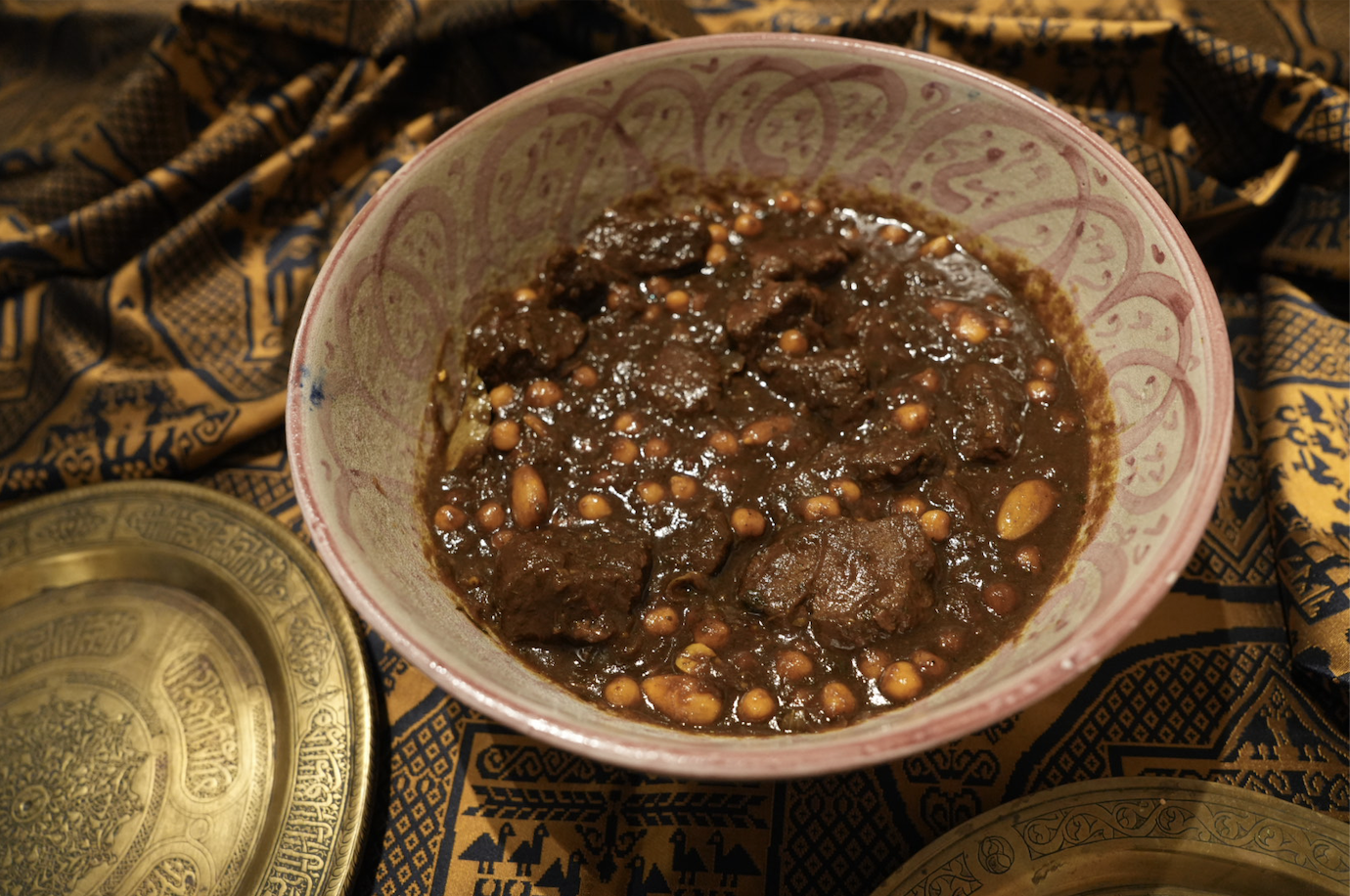
Andalusian venison with chickpeas

This recipe from The Exile’s Cookbook is rather unusual in that it calls for the meat of “a deer, bovine antelope, ass, mountain goat or gazelle – whichever is available to you.” As I had just eaten my last gazelle and mountain goat last week, I had to make do with just venison. The meat is cooked with a variety of spices (coriander, cumin, salt, pepper, etc.), as well as onions, murri, almonds, and, of course, chickpeas. I also added home-grown fennel and oregano. Saffron is included later on for colouring and vinegar, well because it just has to be in everything! Besides the above animals, the author suggests using hare, rabbit and — wait for it — hedgehog (in fact, this is the only cookery book to mention eating this animal).

Spotlight on: Cucumber

The cucumber (Cucumis sativus) is a member of the Cucurbitaceae family, which also includes gourds and melons, and its cultivation history goes back at least 4,000 years. It probably originated on the Indian sub-Continent, but was already known to the ancient Mesoptamians and Greeks.

The route taken by the cucumber from its Indian homeland to the Mediterranean is revealed in the common Arabic words for it — khiyār (خيار) and qiththā (قثاء). The former is a Persian loanword, whereas the latter goes back to the Assyrian qiššū (which may, in fact, be related to the older Sumerian úkuš). The word qiththā ((or quththā’) appears in the Qur’ān (2:61) and also referred to the snake-cucumber, aka snake melon (Cucumis melo var. flexuosus), which was sometimes known as faqqūs in the literature. Both terms are also thought to denote the chate melon (Cucumis melo var. chate). Unripe snake lemons, called ‘ajjur (related to ʿajr, ‘green, unripe’) appear in a number of Syrian and Egyptian cookery books, as an ingredient in stews, or topped or stuffed with meat and vegetables. Cucumbers are also called for in cold dishes (بوارد, bawārid), pickled, or used as a garnish. Sometimes, the juice extracted from cucumber pulp is also mentioned. In any event, cucumbers were more used in the Near East and were a rarity in Andalusian and North African cuisines.

In the medical tradition, the cucumber’s cold and moist properties caused it to be prescribed for a hot liver, as a diuretic and antipyretic, but it was said to cause stomach aches. It was also used to sweeten the breath. The best qiththā’ were said to be from Nisabur.

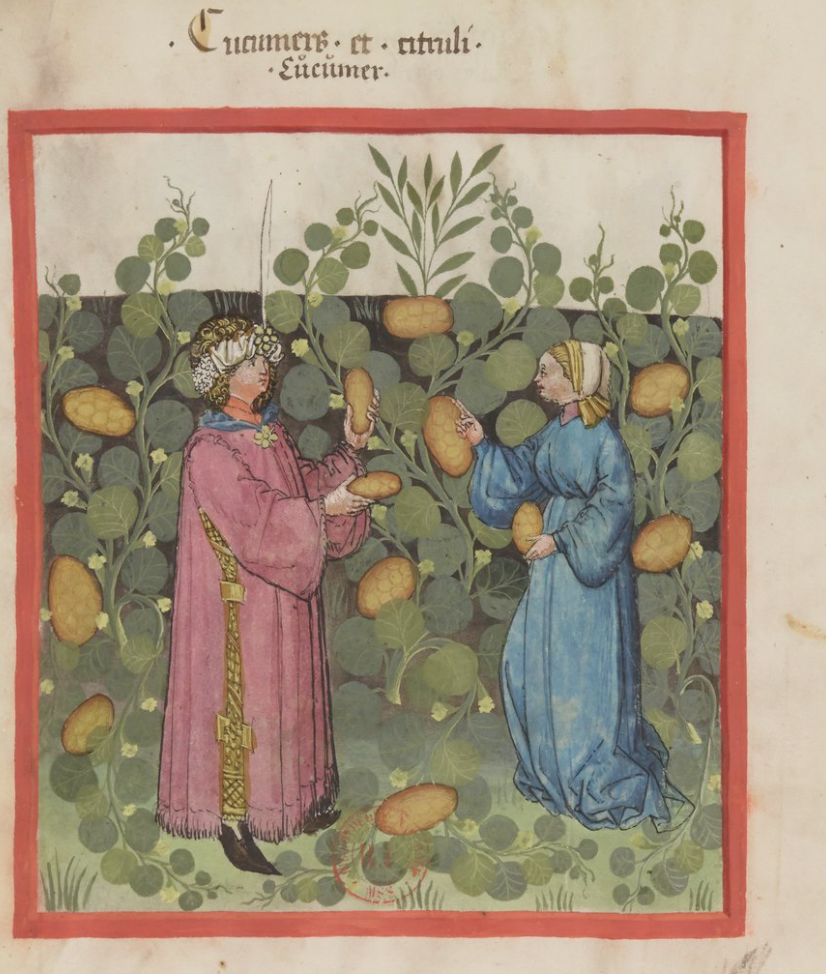
illustration of cucumbers in Tacuinum Sanitatis.
some 13th-century Syrian pickled cucumber recipes

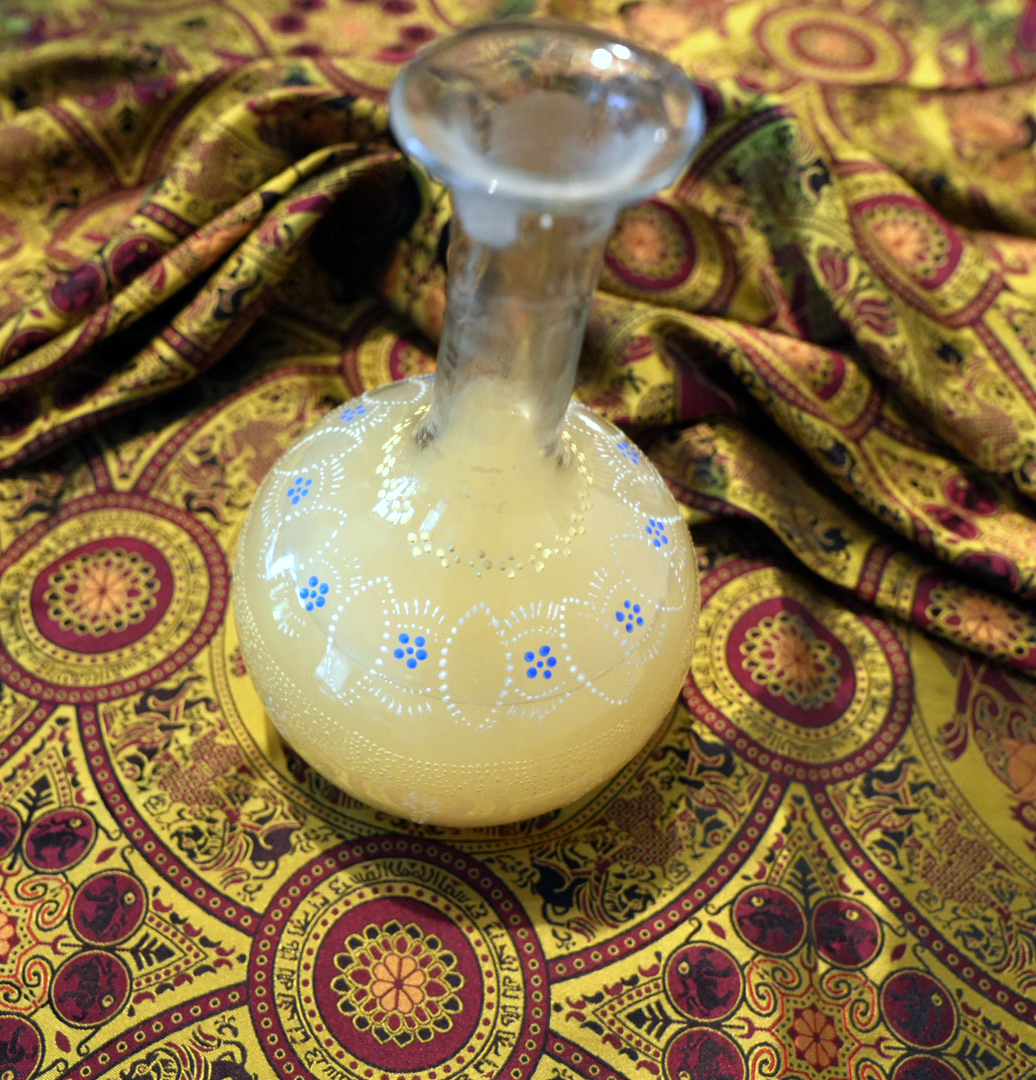
Andalusian Pomelo Vinegar

After making Syrian pickled pomelo, the time came to make a vinegar with this rarely used fruit in the medieval Arab culinary tradition. The recipe was taken from The Exile’s Cookbook, which is the only treatise to refer to a zanbū‘ (زنبوع), which in the East was known as kubbād (kabbād). Pomelo vinegar is called for in a number of recipes, including beef and lamb stews, and in a sauce for grilled meat and fried dried tuna.

The recreation was patterned on the recipe for lime vinegar and is quite simple. The juice of the pomelos is extracted and decanted to glass jars and then salt is added. They should be left out in the sun and strained a couple of times more, after which the vinegar is ready for use. The author recommends sealing the jars with olive oil for storage.

If, like me, you’ve never had pomelo vinegar, it has a wonderfully tangy flavour. In fact, I discovered it works very well as a dip — possibly mixed with olive oil — for bread.

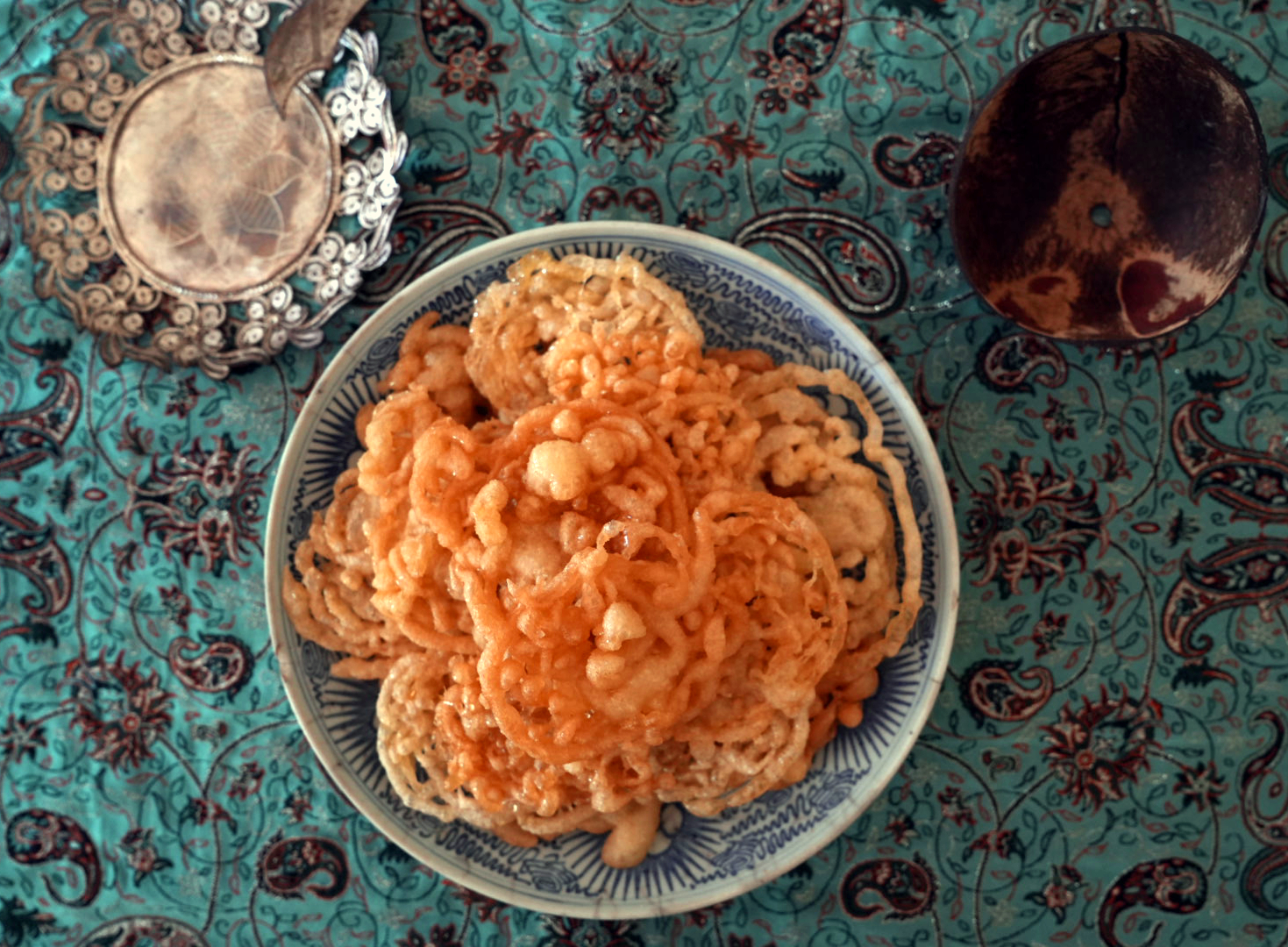
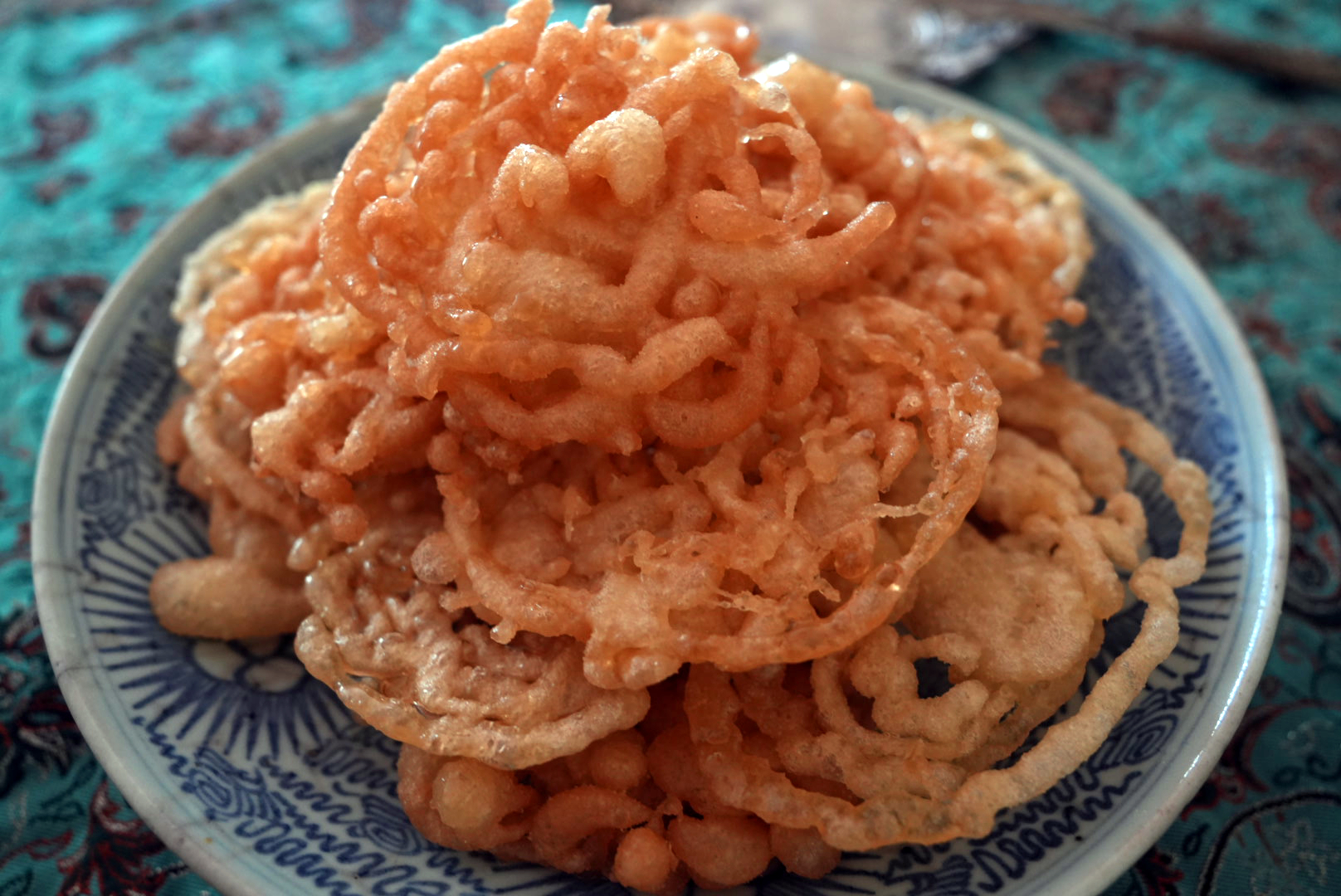
Medieval Andalusian zalābiyya

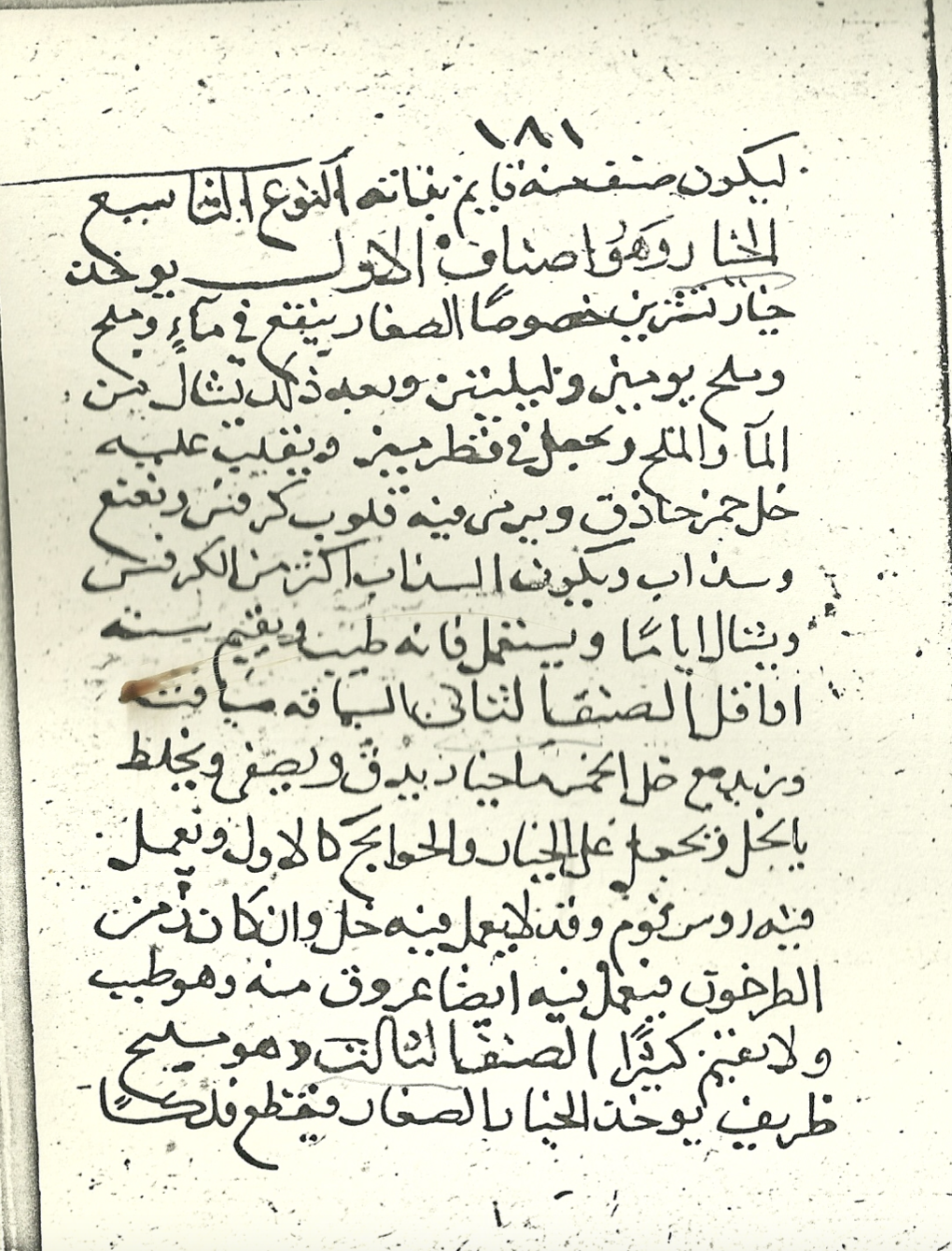
The recipe for this fritter was taken from the The Exile’s Cookbook, and differs from an earlier zalābiyya/zulābiyya (زلابية) recreation based on another cookery book in that yeast is added to make a batter of medium consistency. The process is essentially the same as that found already in the Abbasid tradition and involves dripping the batter into a pan in which olive oil has been heated up. The author suggests a thimble-sized cup with a small hole in the bottom, but I went old school and used a pierced coconut shell, which is recommended in an earlier Abbasid recipe. Failing that, a funnel does the trick as well, of course!

The fun part is that you make shapes — lattices, circles, and so on (in fact, anything you like!). Once the zalābiyya pieces are done, they’re taken out of the pan and drenched in boiled skimmed honey. Leave them to dry a bit and then serve — heaven on a plate!

Unfortunately, physicians had a less than favourable view of these delightful fritters since zalābiyya were said to be slow to digest; harmful to the liver, spleen and kidneys; to cause blockages and thirst. On the other hand, it is possible that we should thank some of those physicians, such as the 12th-century physician al-Isrā’ilī, who recommended eating zalābiyya with honey to counter some of these harmful properties.

The modern descendants of this sweet include the North African zlabia, the Egyptian and Levantine mushabbak (‘latticed’), the Indian jalebi, or the North American funnel cake. In Egypt, zalābiyya refers to a deep-fried doughnut, known elsewhere as ‘awwāma (عوّامة, ‘floater’), luqmat al-Qāḍī (لقمة القاضي, ‘the judge’s morsel’) or luqayma (لقيمة, ‘little morsel’), depending on the region.

Spotlight on: Salt

Both sea and rock salt were known in Antiquity. It was already quarried in Ancient Egypt and the Romans started producing salt on a very large scale. It was especially important for preserving food but salt was also used in cooking; in Greek times already it was sprinkled on meat roasts and fish, whereas there are references to various kinds of seasoned salts, added with, for instance, thyme or cumin. However, the most common salting agent was garum. According to the botanist Dioscorides, the best salt was white, free of stones and dirt, dense and smooth. He particularly recommended salt quarried in Libya, Cyprus and Sicily, and that from marshlands.

Pre-Islamic Arabs already used salt to season their food, but it also played an important role in some of their rites, as in an oath-swearing underpinning alliances. Though primarily referring to table salt (sodium chloride), the Arabic word milḥ (ملح) can also denote other salt-like substances, such as natron. The literature distinguishes between sea salt (ملح بحري, milḥ baḥrī ) and rock salt (ملح برّي, milḥ barrī , i.e. ‘soil salt’). Salt was quarried in various areas (e.g. Persia) or acquired from salt marshes. A premium type or rock salt was known as milḥ darānī, or andarānī, which was considered the purest, i.e. devoid of any dust or rock.

Salt is one of the most used spices and condiments in mediaeval Arab cuisine, both as a seasoning and to preserve various kinds of foods, as well as in pickling. Besides the salting of meat and fish, the sources also include recipes for salted fruit, especially lemons. Some authors recommended adding salt at the end since it can slow down the cooking time of other ingredients. The modern pair of salt and pepper co-occur in half of the recipes requiring salt (especially with fish), and is often also used in dishes including almonds or cassia. Meat was washed with hot water and salt before cooking it. Similarly, aubergine was soaked in salt and water to remove the bitterness. One of the popular dishes in the early Abbasid tradition were mā’ wa milḥ (‘water and salt’) stews, which involved meat being cooked in a broth of water and salt.

The 12th-century physician al-Isrā’ilī recommended using salt to balance food (e.g. fish), when food has no flavour (e.g. gourd); to dry out excessively moist food; and to remove greasiness and bad odours (e.g. fatty and greasy meats); and to reduce sourness.

As a condiment, salt was often mixed and toasted with other spices (e.g. coriander, sesame, nigella, hemp seeds, poppy seeds, cumin, fennel seeds, asafoetida leaves and anise) into milḥ muṭayyab (ملح مطيّب, ‘seasoned salt’). It could also be dyed, for instance, with sumac or saffron, or even indigo.

Salt was put to some unusual use in agriculture; for instance, it was said that to extend the life of a pear tree, it should be covered with salt, which would prevent the fruit from rotting.

Salt was a vector of social and religious connotations as well To the ancient Greeks already sharing salt signified the sharing of a meal but, by extension, hospitality and the establishment of friendship ties. In Arabic, the saying ‘there is bread and salt between us’ (بيننا خبز وملح) still has this meaning.

Various sayings of the Prophet (hadith) commend the use of salt: it is required to make food flavoursome (لا يَصْلُحُ الطعام إلا بالمِلح), and is one of the four divine blessings sent down from the heavens, together with iron, fire and water (أَنزَلَ أربعَ بَرَكاتٍ من السماء إلى الأرض: الحديد والنار والماء والملح). The Prophet is even said to have advised making salt the basis of food because it cures seventy-two illnesses, among them, leprosy, and aches in the tooth, throat and belly.

In Islamic medicine, salt was considered hot and dry in the second degree, with bitter, astringent and dissolvent properties, whereas darānī salt expels wind. Al-Isrā’ilī said salt was effective against malignant ulcers, while Ibn Sīnā recommended it as an antidote for scorpion bites; and to counter the ill effects of opium.

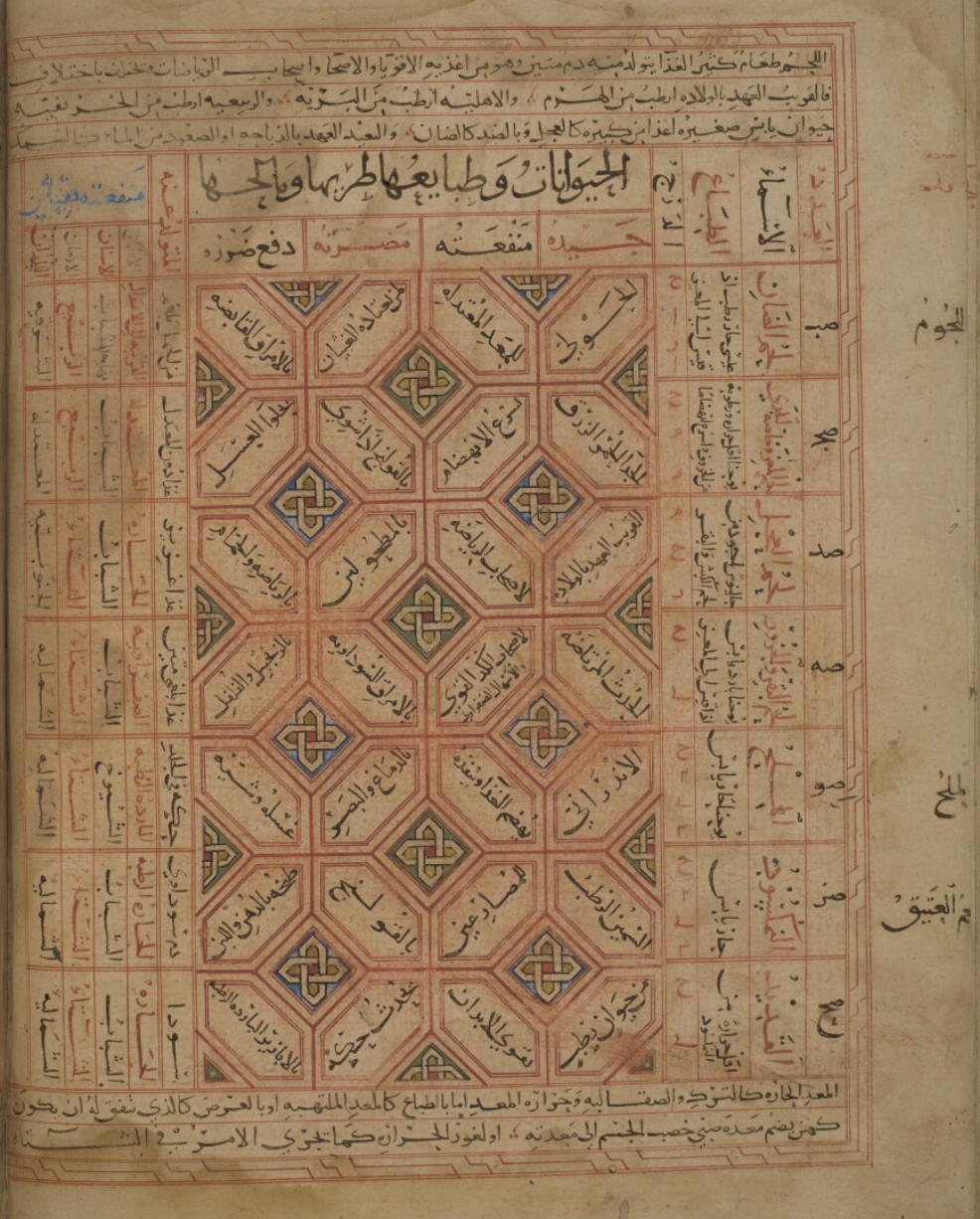
salt in Ibn Butlan’s Taqwim al-sihha (British Library)
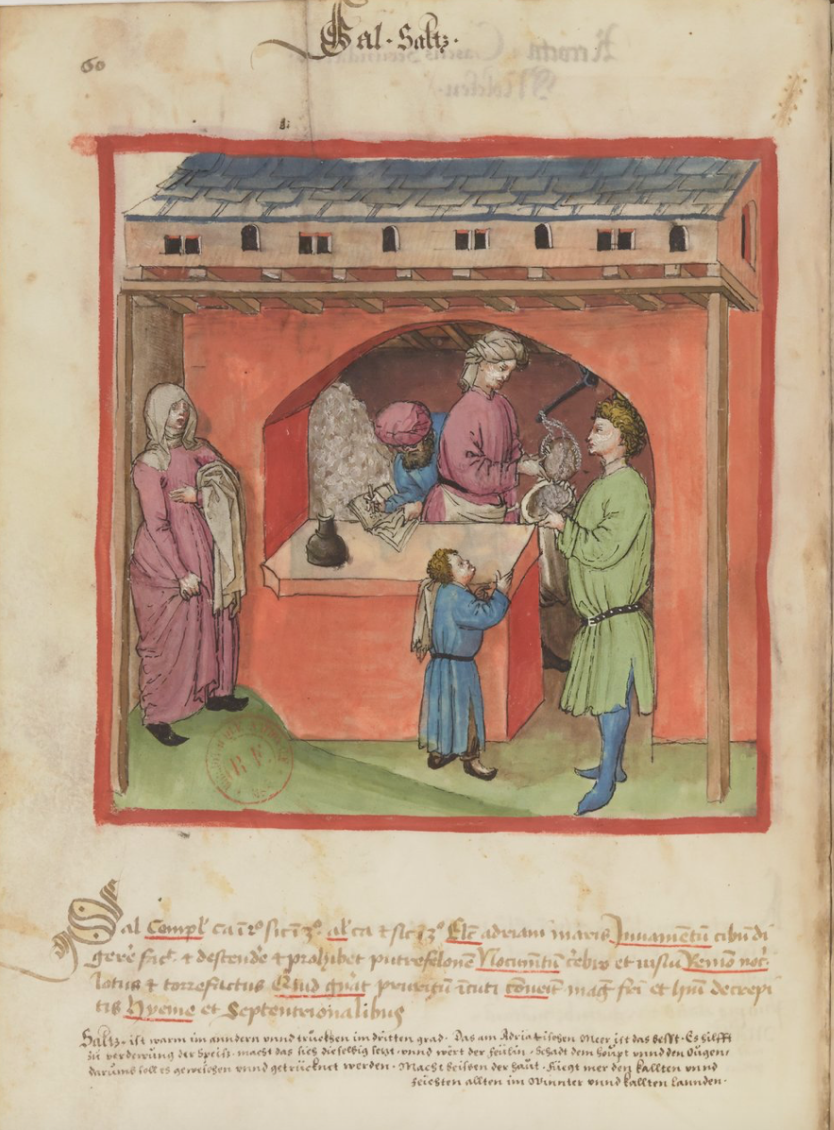
selling salt in the Latin translation of Ibn Butlan’s work, Tacuinum sanitatis (Bibliothèque nationale de France)